Inflammatory skin diseases are a major source of diminished quality of life and have an impact on the physical, emotional, and social life of patients and their co-habitants. Beyond the itch, redness, flaky skin and pain, these skin conditions can cause discomfort, embarrassment and frustration.
Oncology treatments
Impact on patients receiving oncology drugs
Cutaneous reactions from targeted therapies, such as chemotherapy, immunotherapy or haematological treatments are common and may be predictable.3
Skin reactions can have a negative effect on a person’s physical, functional, emotional, and social well-being3, and may lead to medication dose changes or even discontinuation of the treatment if severe. For these reasons, effective treatment is crucial.4
These therapies may cause a wide range of cutaneous reactions, including damage to rapidly growing skin and nail cells. Consequently, patients may experience:3, 4
Dry
Itchy
Red
And/or peeling skin
Rash
Increased sensitivity to sunlight
80%
of patients receiving oncology drugs develop cutaneous reactions.6
Skin reactions may lead to dose modification by 36%.6
72%
Skin reactions may lead to treatment discontinuation by 72%.6
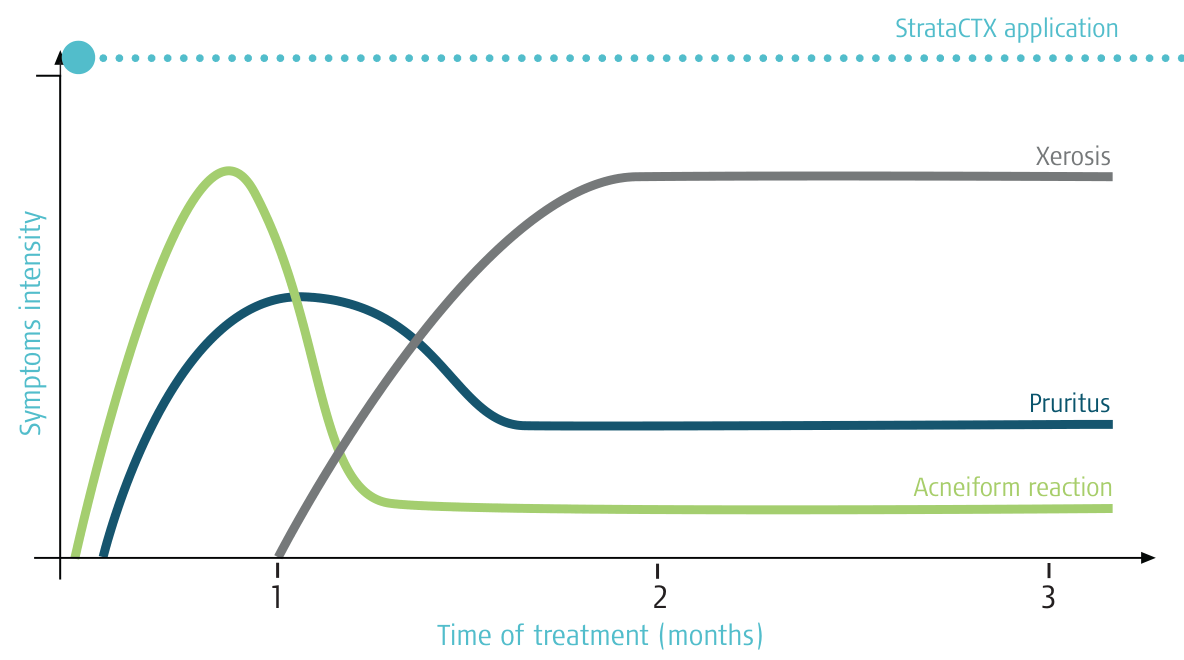
Changes over time
Progression of symptoms and cutaneous reactions.8, 9
When undergoing epidermal growth factor receptor inhibitor (EGFRI) therapy the likelihood of experiencing cutaneous reactions is very high.
Visual representation of the progression of such reactions over several months.
Support the skin barrier.
StrataCTX can be applied from the initiation of targeted therapies or at the first signs of skin symptoms, effectively reducing the risk of treatment discontinuation due to cutaneous reactions.